

Your customers search, compare, and buy online before they talk to a salesperson. BrightLocal's 2025 Consumer Search Behavior report found that 58% of surveyed US consumers search online several times a day. Another 24% search daily, so 82% search at least once a day. Its 2025 Local Consumer Review Survey adds that 96% of respondents are open to writing a business review, and 81% use Google to find reviews. Both studies surveyed US consumers. Your business must show up in those searches and earn those reviews. Doing it well is hard. Algorithms change, platforms multiply, and competitors bid for the same attention. A digital marketing agency turns marketing spend into real growth.
Here are seven reasons to partner with one.
You Get Access to Specialized Expertise
Digital marketing is not one skill. It covers SEO, paid advertising, content creation, social media, email marketing, analytics, and design. Hiring one specialist for each role costs a lot and takes time.
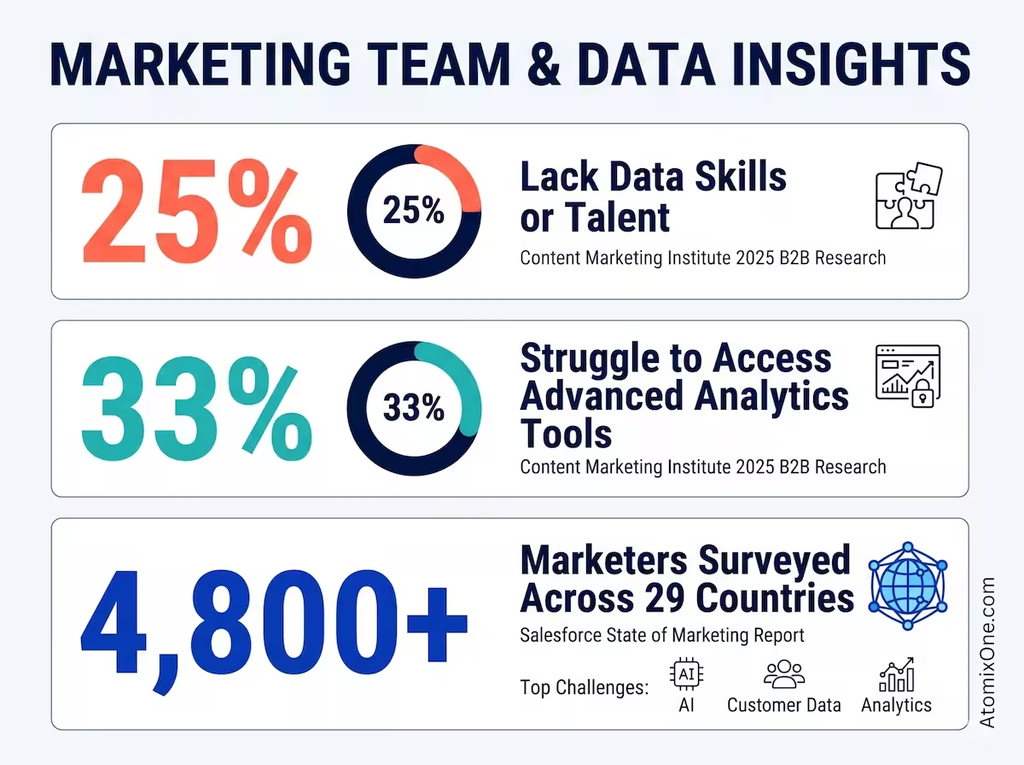
The Content Marketing Institute's 2025 B2B research shows the gap. It found that 25% of respondents lack data skills or talent, and 33% struggle to access advanced analytics tools.
Salesforce surveyed more than 4,800 marketers across 29 countries for its 2024 State of Marketing report. The research covered AI adoption, customer data, personalization, and the challenges marketing teams face.
Businesses need people who can analyze data, manage technology, create content, and run campaigns. An agency brings these skills together, so you do not recruit every specialist. Many of its people have solved problems like yours for other clients. You gain from that experience on day one.
It Costs Less Than Building an In-House Team
A full in-house team brings salaries, benefits, training, software licenses, and recruitment costs. Even a small team can outgrow a modest marketing budget fast. Gartner's 2025 CMO Spend Survey of 402 marketing leaders in North America, the UK, and Europe puts the pressure in numbers. Budgets averaged 7.7% of company revenue, and 59% of those leaders said their budgets were too small to carry out their planned strategies. These figures describe large companies. They show budget pressure, and they do not prove that agencies always cost less. An agency charges a fixed monthly fee or a project rate. It brings its own tools and platforms. You pay for results and skill, not for full-time staff. Compare real salary, recruitment, software, and agency fee quotes for your market to see the true difference.
You Stay Ahead of Changing Trends
Search algorithms update. Social platforms change their reach rules. New ad formats appear almost every quarter. BrightLocal surveyed 1,000 US consumers and found that 40% actively use generative AI within search. That changes how people find businesses. The Content Marketing Institute reports that 27% of B2B respondents see keeping up with new technology as a content marketing challenge. Keeping up with all of it is a full-time job. Agencies live in this work every day. They watch these changes, test new methods, and adjust content, search strategy, and advertising fast. You do not react late to a change that cuts your traffic. Your partner has already changed the plan.
Data Replaces Guesswork
Many businesses post content and run ads without knowing what works. HubSpot reports that only one in five surveyed marketers have fully integrated their marketing data with their tools. Another 30% describe the links between their tools as somewhat or very disconnected. The Content Marketing Institute found that 47% of B2B respondents struggle to measure content results. Collecting data is not enough. A good agency connects it and tracks the numbers that matter: traffic, conversion rates, cost per lead, customer acquisition cost, and return on ad spend. It builds the reports, then uses them to show which activities bring leads and sales. You get clear results and honest answers. Your plan gets better over time and stops depending on hunches.
You Free Up Time to Run Your Business
Every hour spent on ad settings or social posts is an hour lost on product, customers, or operations. Content takes people and time. The Content Marketing Institute found that 76% of surveyed B2B marketers have a dedicated content marketing team or staff member. Of those, 54% have just two to five people. Nearly one-quarter, or 24%, have no dedicated content staff at all. These figures cover content marketing teams, not the total time owners spend on marketing. Outsourcing lets you and your team focus on what you do best. Professionals handle campaign planning, launch, and improvement. Growth feels lighter when the whole load is not on you.
You Get Better Tools, Technology, and Resources
Professional marketing relies on tools for keyword research, competitor analysis, email automation, social scheduling, heat maps, and advanced analytics. Many carry high subscription fees. The Content Marketing Institute found that 33% of surveyed B2B marketers have limited access to advanced analytics tools, and 29% struggle with complex or inadequate reporting systems. Software alone does not guarantee results. Your team needs people who know how to use it. Gartner found that 49% of surveyed marketing leaders report better time efficiency from generative AI investments. Another 40% report better cost efficiency, and 27% say these investments raise their capacity to produce content or handle more business. These figures concern generative AI investments, not agency services directly. They show the value of technology and automation. Agencies already pay for such tools and bring the skills to run them. This can cut the need for separate software subscriptions and specialist hires. You can reach creative staff such as copywriters, designers, video editors, and developers without hiring each one.
Strategies Grow With You
Your needs differ for a startup launch, a new market, or a seasonal sale. Content marketing can serve several goals. The Content Marketing Institute found that 87% of surveyed B2B marketers said it built brand awareness over the previous 12 months. Seventy-four percent said it generated demand or leads, and 49% said it generated sales or revenue. The same research found that top-performing B2B marketers were more likely to expect their content teams to grow in 2025. They were also more likely to report effective strategies, better measurement, and scalable content production. This finding does not mean most companies plan to hire. It shows why plans must link content production to measurable results. An agency adds channels, raises ad budgets, or shifts messaging and staffing as your goals change. A fixed in-house team struggles to move this fast. An agency helps you act on opportunities sooner.
How to Choose the Right Agency
Not every agency fits your business. Look for these signs:
- Proven results: Ask for case studies and references from your industry or a similar one.
- Transparent reporting: You should always know what the agency does and what it achieves.
- Clear communication: A good partner explains strategy in plain language.
- Customized strategy: Avoid agencies that sell one-size-fits-all packages.
- Aligned goals: They should care about revenue and growth, not just clicks and likes.
Final Thoughts
A digital marketing agency is not a magic fix. It is a strong growth partner. With expert skills, better tools, data-led strategy, and room to grow, it puts your business in front of the right audience at the right time. Then it turns that attention into lasting customers. The online space is crowded. To compete and grow, bring in the right agency. It is one of the best investments you can make this year.